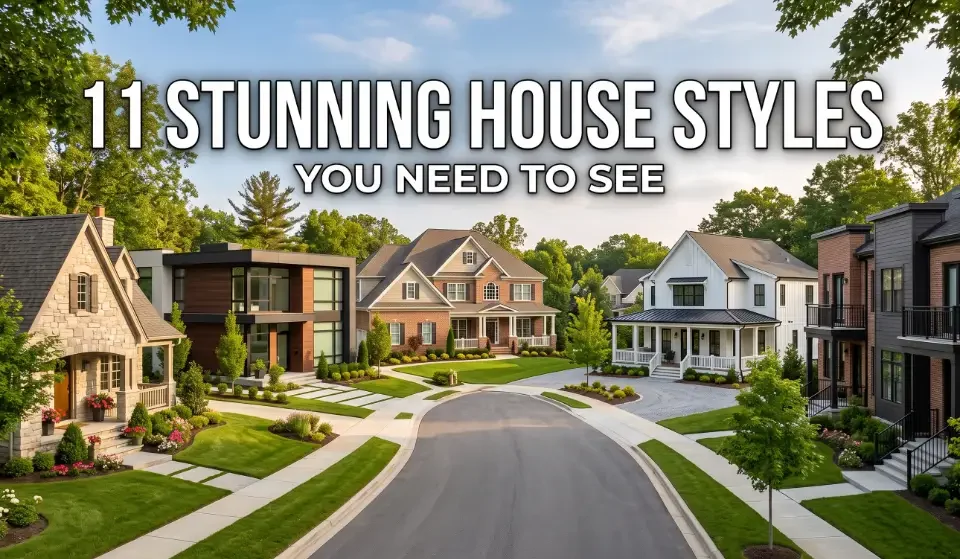

Choosing a home can feel confusing when every listing uses different terms for types of houses. One may look charming, while another seems easier to maintain or better suited to your family. The problem is that house style affects more than curb appeal. It can influence layout, maintenance, natural light, privacy, and how well a home fits its climate. This guide makes that choice easier. You’ll discover 11 popular American house styles and what makes each one different. You’ll also learn where they work best, what problems to watch for, and how to compare them before buying or renovating. By the end, you’ll have a better way to narrow choices.
What Are the Different Types of Houses?

Before comparing styles, it helps to understand the terminology. A house type can describe how a property is structured or arranged, while an architectural style describes its visual design. For example, a townhouse describes a housing arrangement, while Craftsman describes an architectural style. These terms can overlap in real estate listings.
The difference matters when you’re searching for a home. A single-family property could have a Colonial, Ranch, or Craftsman design. The National Park Service also groups American residential architecture into different forms and styles, showing why these labels shouldn’t always be treated as interchangeable.
| Term | What it describes | Example |
| House type | Basic structure or housing arrangement | Single-family home |
| Architectural style | Exterior and interior design character | Craftsman |
| Floor plan | Arrangement of rooms | Open floor plan |
A common beginner mistake is assuming every housing label refers to the same thing. Instead, ask two simple questions: How is the home structured? and What architectural style does it follow?
11 Stunning Types of Houses and Home Styles to Know
A house can look perfect in photographs and still have practical drawbacks. A dramatic roof may cost more to maintain, while an attractive floor plan may provide less storage than expected. That’s why it’s useful to look beyond curb appeal when comparing homes.
The following 11 styles are well-known in American residential architecture. Each section explains its defining features, practical advantages, and potential limitations so you can judge whether the style actually suits your needs.
1. Ranch House

A Ranch house usually has one story with a long, low profile. Common features include a low-pitched roof, wide eaves, large windows, and an attached garage. Many Ranch homes also connect living areas with patios or backyards. The National Park Service describes the Ranch as a major postwar American house form with a horizontal emphasis and low roofline.
This style can work well if you prefer single-level living or want to avoid stairs. However, a Ranch isn’t automatically cheaper to maintain. Its wider footprint can mean more roof and exterior area. Before buying, check the roof, windows, insulation, and heating and cooling systems.
2. Colonial House
Colonial homes are known for balanced façades, traditional proportions, and clearly defined rooms. Many examples have two stories with evenly spaced windows and a centered entrance. Colonial Revival homes became especially influential in the United States, adapting earlier Colonial features to newer construction methods.
This style can suit households that prefer separate rooms rather than one large open space. The main drawback is the stairs. Also, don’t assume every symmetrical traditional home is an original Colonial. Many are later Colonial Revival designs that borrow historic features.
3. Craftsman House
Craftsman homes emphasize craftsmanship, natural materials, and practical details. Typical features include broad front porches, low rooflines, wide eaves, exposed rafters, and substantial porch supports. Many interiors also include built-in cabinets, woodwork, and other details that give the home a warm character.
This style can be appealing if you want a house with personality without an overly formal appearance. Older examples may require more specialized maintenance, however. Before purchasing one, inspect the roof, woodwork, foundation, windows, and previous renovation work rather than focusing only on its attractive exterior.
4. Cape Cod House
A Cape Cod house usually has a compact shape, steep roof, simple exterior, and one or one-and-a-half stories. Dormer windows often bring additional daylight and usable space upstairs. The style has strong associations with New England and developed from practical residential traditions.
A Cape Cod can suit buyers who want a smaller footprint and cozy rooms. The main limitation often appears upstairs. Sloped ceilings can reduce usable space near the roof edges. Therefore, don’t judge the home only by its advertised square footage. Measure the rooms and check storage carefully.
5. Victorian House
Victorian homes are often recognized by decorative trim, complex rooflines, bay windows, tall windows, porches, and detailed woodwork. However, Victorian isn’t one precise architectural style. The term covers several styles associated with the Victorian era and later interpretations.
That variety gives these homes plenty of visual character. It can also make repairs more complicated. Older windows, wood siding, roofs, and decorative features may require careful restoration. If you’re considering one, inspect the major building systems first. A beautiful exterior won’t compensate for expensive hidden problems.
6. Tudor House
Tudor-style homes often feature steep roofs, prominent gables, arched entrances, masonry walls, and decorative half-timbering. Their unusual combination of materials and strong rooflines gives them a distinctive appearance. American Tudor Revival homes drew inspiration from older English and medieval buildings.
The complex roof and exterior deserve careful inspection. More roof intersections can create additional areas where water problems develop if drainage isn’t handled properly. If you’re considering a Tudor home, pay attention to the roof, masonry, gutters, windows, and exterior joints before making an offer.
7. Modern Farmhouse
Modern Farmhouse homes combine familiar rural details with newer layouts. You may see board-and-batten siding, covered porches, large windows, simple roof forms, and open kitchens connected to living spaces.
This style can work well if you like traditional curb appeal but want contemporary functionality. Still, a Farmhouse appearance doesn’t mean the property is an actual farm. Many newer homes simply use the visual style. When comparing listings, focus on the floor plan, storage, lot size, construction quality, and maintenance needs.
8. Contemporary House

Contemporary homes usually emphasize clean lines, large windows, open spaces, and a connection with the surrounding landscape. Unlike a historic style with a fixed period, contemporary design continues to change as architects use newer materials, technologies, and ideas.
Large windows can bring excellent daylight and attractive views. They can also affect heat gain, cooling costs, privacy, and maintenance. That’s why the local climate matters. Before choosing this style, consider window placement, shading, insulation, and the home’s overall energy performance.
9. Mid-Century Modern House
Mid-Century Modern homes often feature simple forms, open interiors, large windows, and strong connections between indoor and outdoor areas. Many American examples date from the middle decades of the twentieth century and reflect changing ideas about casual family living.
These homes can be excellent candidates for careful renovation. The challenge is updating electrical systems, plumbing, insulation, windows, or heating without removing important original details. If you find one, decide early whether your goal is preservation, modernization, or a balance of both.
10. Mediterranean House
Mediterranean homes commonly feature stucco walls, tile roofs, arched openings, courtyards, and outdoor living areas. These elements create a strong connection with warm-climate design. Mediterranean Revival is also recognized within the broader family of American revival styles documented by the National Park Service.
The style can be especially appealing when outdoor living is important. However, appearance shouldn’t be your only consideration. Stucco, tile, drainage, and roofing still need regular inspection. Make sure the materials and construction details suit your local weather before choosing this style for a new build or renovation.
11. Bungalow House
Bungalows generally have a compact footprint, one or one-and-a-half stories, a low roofline, and a welcoming front porch. Their proportions can make a modest home feel comfortable without adding unnecessary floor area. The National Park Service also identifies Bungalow/Craftsman as a recognized category within American architectural history.
Bungalows are often confused with Craftsman homes, but the terms don’t mean exactly the same thing. Bungalow can describe a house form, while Craftsman describes an architectural style. A property can be both. Understanding this difference helps when you’re searching for an older home or planning a historically appropriate renovation.
How to Choose the Right House Style for Your Lifestyle
Choosing among popular house styles becomes easier when you focus on daily life instead of appearance alone. Think about stairs, maintenance, climate, storage, privacy, household size, and how your needs could change later. A style that looks attractive may not suit the way you actually use your home.
For example, a Ranch can suit someone who prefers everything on one level. A Colonial may work better for someone who likes defined rooms and traditional separation. A Contemporary home can appeal to someone who values natural light and open spaces. If you’re also planning improvements, you can explore ideas on HomeEvery before deciding which changes make sense.
| Your priority | Styles to consider | What to check |
| Fewer stairs | Ranch, Bungalow | Bedroom and bathroom locations |
| Traditional rooms | Colonial, Cape Cod | Room sizes and circulation |
| Architectural character | Craftsman, Victorian, Tudor | Maintenance history |
| Open living | Ranch, Contemporary, Modern Farmhouse | Interior layout |
| Outdoor living | Ranch, Mediterranean, Contemporary | Yard and climate |
| Compact space | Cape Cod, Bungalow | Storage and ceiling height |
One common mistake is choosing a style before checking the property itself. A large Ranch may require more land than a compact two-story home. Likewise, a dramatic exterior can hide a cramped interior. Compare the house, floor plan, lot, neighborhood, and maintenance needs together.
House Styles by Region: What Fits Different Parts of the U.S.?
American residential architecture developed through local climate, available materials, history, and building traditions. As a result, some styles have strong regional associations. Modern construction has since spread many designs far beyond their original locations, so regional patterns are useful guides rather than strict rules.
New England is strongly associated with Colonial and Cape Cod homes. California has many Craftsman, Mediterranean, and Mid-Century Modern examples. The Midwest also has extensive Ranch, Bungalow, and Craftsman housing. Historic resources from the National Park Service show how residential styles developed differently across American communities.
| U.S. region | Styles you may encounter | Common influence |
| Northeast | Colonial, Cape Cod, Victorian | Early American traditions |
| Midwest | Ranch, Bungalow, Craftsman | Practical residential design |
| Southeast | Ranch, Colonial, Farmhouse | Warm-climate adaptations |
| Southwest | Mediterranean, Contemporary | Heat and outdoor living |
| West Coast | Craftsman, Mid-Century Modern, Contemporary | Indoor-outdoor design |
Don’t treat these regional patterns as fixed rules. You can find many architectural styles throughout the country. When buying, local housing supply, neighborhood history, climate, and the condition of the individual property matter more than a broad regional label.
What to Check Before Buying a House Style You Love
A beautiful home can still hide expensive problems. Before buying, look beyond siding, windows, porches, and roof shapes. Check the foundation, roof condition, electrical system, plumbing, HVAC equipment, insulation, drainage, and signs of moisture. Older homes deserve particular attention because repairs may involve original materials or specialized craftsmanship.
Historic-district rules can also affect what you are allowed to change. HOA rules may limit exterior colors, additions, fencing, windows, or other modifications. Check these restrictions before planning renovations. A house can match your taste perfectly and still limit the changes you want to make.
| Area to inspect | Why it matters | Question to ask |
| Roof | Repairs can be expensive | How old is it? |
| Foundation | Structural problems can be serious | Are there cracks or movement? |
| Windows | Affect comfort and energy use | Are they original or replaced? |
| HVAC | Major operating expense | How old is the system? |
| Exterior | Helps prevent water damage | Is there rot or cracking? |
| Electrical | Safety and capacity | Has it been updated? |
| Plumbing | Repairs can become costly | What materials are installed? |
The biggest beginner mistake is falling in love with the exterior before checking the home’s condition. Think of the façade as the cover of a book. It tells you something about the property, but it doesn’t tell the whole story.
Types of Houses at a Glance
A quick comparison can help you narrow your search. Keep in mind that homes within the same style can differ greatly in age, size, materials, construction quality, and floor plan.
| Style | Defining feature | Main advantage | Potential drawback |
| Ranch | Single-level layout | Easy movement | Larger footprint |
| Colonial | Symmetrical design | Defined rooms | More stairs |
| Craftsman | Detailed woodwork | Strong character | Maintenance |
| Cape Cod | Steep roof | Compact footprint | Sloped ceilings |
| Victorian | Ornate details | Historic character | Upkeep |
| Tudor | Steep roof and timbering | Distinctive appearance | Complex exterior |
| Modern Farmhouse | Porch and open plan | Traditional look with modern layout | Can feel repetitive |
| Contemporary | Clean lines and glass | Light and openness | Privacy concerns |
| Mid-Century Modern | Indoor-outdoor connection | Strong design identity | Older systems |
| Mediterranean | Stucco and tile | Outdoor living | Climate considerations |
| Bungalow | Compact design | Efficient living | Limited upper space |
There isn’t one perfect style for every buyer. The right choice depends on budget, location, household needs, maintenance tolerance, and future plans. Comparing practical needs with appearance gives you a much clearer starting point.
Frequently Asked Questions About Types of Houses
What are the most popular types of houses in the U.S.?
Ranch, Colonial, Craftsman, Cape Cod, Bungalow, and Modern Farmhouse designs are widely recognized across the country.
Popularity still varies by region, neighborhood age, housing supply, and local building traditions.
What is the difference between a house type and a house style?
A house type usually describes the home’s basic structure or arrangement, while a style describes its architectural appearance.
For example, a single-family home can have a Craftsman or Colonial architectural style.
Which house styles are easiest to maintain?
Simple designs with fewer exterior details can reduce maintenance, but age and materials often matter more than style.
A newer home may need less work than an older property regardless of its architectural appearance.
What house style is best for a small lot?
A compact Bungalow or Cape Cod can work well on a smaller lot, depending on local rules and the layout.
Always check setbacks, parking, storage, and usable floor area before choosing a property.
Which house styles work well for families?
Ranch, Colonial, Craftsman, and Modern Farmhouse homes can all work for families when their layouts fit the household.
Pay attention to bedrooms, bathrooms, storage, stairs, outdoor space, and room separation before deciding.
Final Thoughts on Choosing a House Style
The most useful way to compare types of houses is to look beyond curb appeal. Ranch homes can simplify single-level living. Colonial homes offer traditional room separation. Craftsman and Bungalow designs bring character and practical proportions. Contemporary and Mid-Century Modern homes can create a stronger connection with outdoor spaces.
Your next step is simple: shortlist three styles that fit your lifestyle, then compare actual properties by condition, floor plan, climate, maintenance, and renovation rules. That approach turns a general style preference into a practical home-buying decision.


