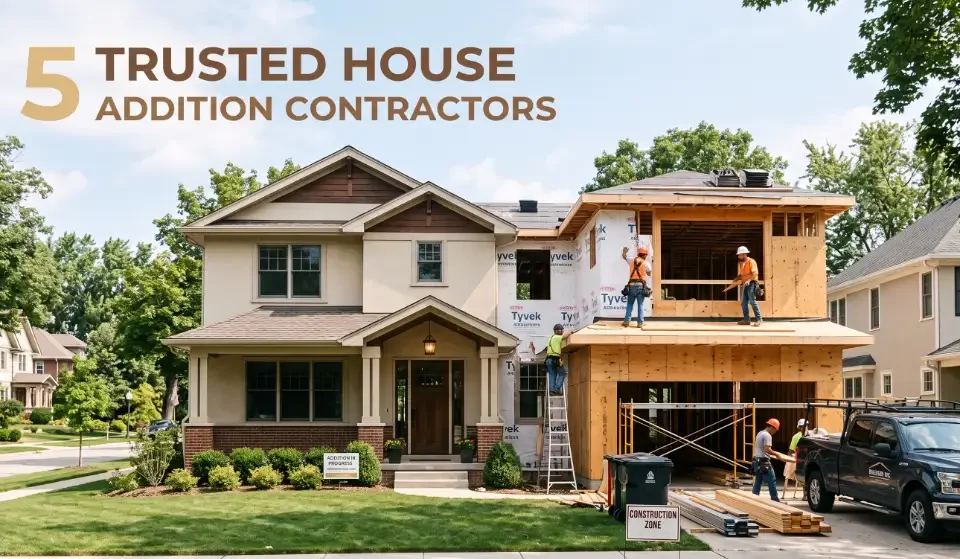

Your family keeps growing, but your square footage stays the same. Picking from dozens of house addition contractors feels risky, because one bad hire can cost you thousands. You’re right to worry. Many homeowners learn that lesson the hard way.
This guide takes that fear away. You’ll meet five well-known builders, see what fair pricing looks like, and get a simple plan for hiring the right pro. Next, we’ll compare builders, costs, timelines, permits, and red flags.
Why Homeowners Build Up Instead of Moving
Moving costs a lot. Agent fees, closing costs, and a new mortgage rate add up fast. An addition lets you keep your neighborhood, your schools, and your neighbors. That’s why many families choose a home addition over a new address.
An addition also builds equity in a house you already love. A new master suite or extra bathroom can raise your property value. You get the space you need now and a stronger asset later.
Addition vs. Moving: Which One Wins?
Build if you love your location and have room to grow. Move if your lot is tiny or your home needs major repairs. This quick table shows the difference.
| Factor | Build an Addition | Move to a Bigger Home |
| Upfront cost | Project cost only | Agent fees, closing costs, new mortgage |
| Location | You keep it | You start over |
| Disruption | Months of noise and dust | One big moving day |
| Best when | You love your street | Your lot can’t handle more space |
What Makes the Best House Addition Contractors Stand Out

Great builders share a few habits. They answer calls fast. They give you a clear itemized estimate. They also explain each step in plain words. In short, they make you feel informed instead of confused.
Beginners often make one big mistake. They hire the lowest bidder. The FTC’s consumer advice says, “Don’t automatically choose the lowest bidder.” The fix is easy: compare each estimate line by line, and ask why any number looks far lower than the rest.
License, Insurance and Bond Explained
Think of a license as a driver’s license. It proves your contractor can legally work in your state. Insurance works like car insurance and covers accidents on the job. A bond acts like a safety deposit that pays you if the builder walks away. Ask for licensed and insured proof before you sign anything.
5 Trusted House Addition Contractors You’ll Love

We picked these five based on their public reputations, services, and regional reach. Every builder here handles design, planning, and construction. Even so, please confirm each company’s license, insurance, and recent reviews in your state before you hire anyone.
| Contractor | Region | Best For |
| Neil Kelly Company | Pacific Northwest | Eco-friendly builds |
| Moss Building & Design | Northern Virginia | Clear pricing |
| Sebring Design Build | Chicago, Illinois | Modern layouts |
| Medford Remodeling | Dallas, Texas | Detailed finishes |
| Blackdog Builders | New Hampshire and Massachusetts | Custom craftsmanship |
1: Neil Kelly Company: Best for Green Builds
Neil Kelly works in the Pacific Northwest and focuses on sustainable building materials. Choose them if you want an energy-efficient addition. Ask how they handle insulation and windows.
2: Moss Building & Design: Best for Clear Pricing
Moss serves Northern Virginia and has a reputation for open pricing and detailed planning. That helps if budgets worry you. Ask to see a sample written contract first.
3: Sebring Design Build: Best for Modern Spaces
Sebring offers full-service additions in Chicago. Their style leans modern and functional. Homeowners who want an open floor plan should start here.
4: Medford Remodeling: Best for Texas Homeowners
Medford covers Dallas and manages projects from design through construction. Their profile stresses high-quality finishes. Ask for photos of recent projects near you.
5: Blackdog Builders: Best for Custom Craftsmanship
Blackdog builds in New Hampshire and Massachusetts. They’re known for careful craftsmanship and creative designs. Choose them for a one-of-a-kind space, then request several references.
Popular Types of Home Additions

Room additions are the classic choice. Sunrooms, garage conversions, and basement finishing also rank high. Each option solves a different problem, so match the project to your real need.
An in-law suite addition deserves special attention. It gives relatives privacy while keeping them close. Need inspiration first? Browse the home improvement guides at HomeEvery and build a wish list before you call anyone.
| Addition Type | Best For | Difficulty |
| Bump-out | A slightly bigger kitchen | Low |
| Garage conversion | Extra bedroom or office | Low to medium |
| Sunroom | Natural light and relaxing | Medium |
| In-law suite | Multigenerational living | High |
| Second story | Big space on a small lot | High |
Adding Up vs. Adding Out
Build up when your lot is small. A second-story addition keeps your yard intact, but it demands strong structural work. Build out when you have land. A ground-level addition needs a new foundation, yet it often costs less per square foot.
How Much Do Home Addition Contractors Charge?
Prices vary widely. On average, homeowners spend about $80 to $200 per square foot. A small room may cost around $25,000. A full second story can top $100,000.
Most house addition contractors quote by the square foot, but your final bill depends on design, materials, and cost per square foot in your area. Get at least three quotes for the same scope. Then compare them side by side. For budgeting help, see the planning tips on HomeEvery.
| Cost Item | Typical Range |
| Architect or designer | $2,000 to $10,000 |
| Permits and inspections | $500 to $2,000 |
| Electrical and plumbing | $1,500 to $5,000 |
| HVAC upgrades | $1,000 to $5,000 |
| Interior finishes | $5,000 to $15,000 |
Hidden Costs Nobody Mentions
The second story addition cost often jumps after demolition begins. Crews may find old wiring or weak framing. Set aside a contingency fund of 10 to 15 percent. This simple step keeps surprises from wrecking your budget.
How Long Does a House Addition Take?
A simple room addition usually takes three to four months. A second story can take six months to a year. That timeline covers design, permit inspection, construction, and final checks.
Weather and material delays can slow things down. Many homeowners find the best time of year to build an addition is spring, so the walls and roof close up before winter. Here’s a pro tip: start your permit paperwork while you compare bids.
Permits and Building Codes
Every addition must follow local building codes and zoning laws. Your city may limit height, size, and distance from the property line. Good builders know these rules well.
Ask who pulls the building permits. Most contractors handle this step for you. A builder who asks you to pull them yourself deserves extra questions.
How to Hire a Contractor Step by Step

Learning how to hire a home addition contractor takes six simple moves. First, collect three written quotes. Second, verify each license with your state. Third, call two past clients. Fourth, ask whether the crew works in-house or hires subcontractors. Fifth, review the contract slowly. Finally, confirm the start and finish dates in writing.
Consider an example. A family in Texas hired the cheapest bid for a bedroom addition. The builder skipped a permit, and the city stopped the job. They paid to redo the work. A simple license check would have saved them.
Red Flags To Walk Away From
Watch for pressure to sign today. Be wary of contractors who demand big cash deposits or refuse a written contract. The FTC also warns against contractors who claim no license is needed. Read its guide to avoiding home improvement scams before you sign.
Payment Schedules That Protect You
Never pay everything upfront. A smart home addition payment schedule ties each payment to finished work. The table below shows an example. Check your state’s down payment limit first.
| Stage | Work Finished | Payment Tied To |
| Signing | Contract and permits | Small deposit |
| Framing | Walls and roof up | Progress payment |
| Systems | Wiring and plumbing done | Progress payment |
| Completion | Final inspection passed | Final payment |
Also handle change orders in writing. Any new request should list the price and time impact before work starts. Hold the last payment until you’re happy.
Ways to Pay for Your Addition
Many owners use a home equity loan or a HELOC. Others choose a cash-out refinance or a personal loan. Each option has different rates and terms. Compare at least three lenders.
Be careful with financing your contractor suggests. The FTC says to shop around before you accept any loan. This step protects your home from bad deals.
Frequently Asked Questions
Who are the best builders for a home addition?
The best builder is licensed, insured, and experienced with your addition type. Compare at least three written quotes.
How much does a house addition cost?
Most projects run $80 to $200 per square foot. Small rooms cost less, and second stories cost far more.
Does an addition increase home value?
A well-planned addition can raise your value, especially an extra bedroom or bathroom. Results depend on your local market.
Do I need a permit for a home addition?
Yes, nearly always. Local building departments require permits and inspections for new living space.
How do I check a contractor’s license?
Search your state or county licensing website. Then ask the contractor for proof of insurance.
Final Thoughts
The right builder makes your project feel smooth instead of stressful. Compare licensing, pricing, and communication before you pick from any list of house addition contractors. Trust your research, and never rush the contract.
Your next step: request three written quotes this week for the same scope of work. Then compare them line by line. Ready to plan your project? Explore more ideas at HomeEvery.


