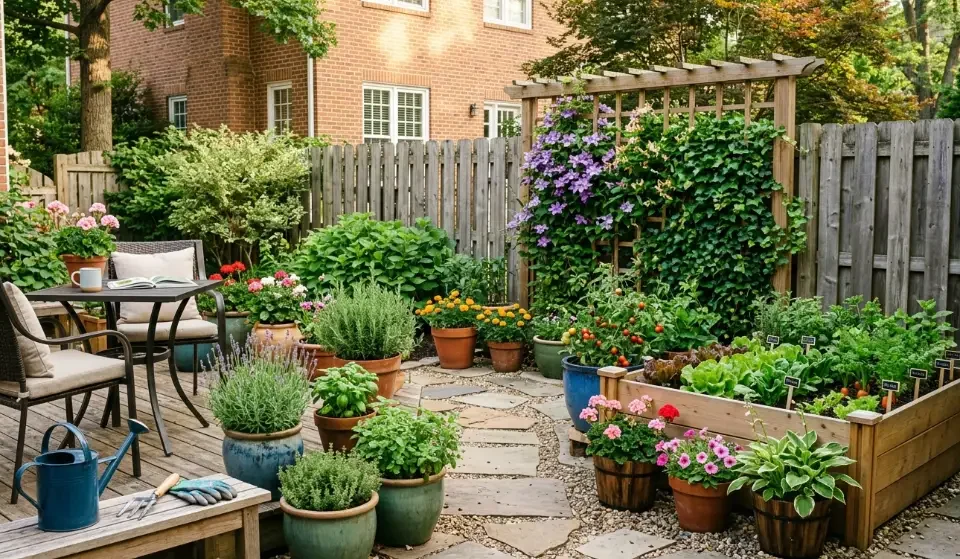

These DecoradHouse Garden Tips by HomeEvery exist because most beginners give up too early. You stare at your patio and wonder why nothing survives past June. Impulse buys and skipped soil prep pile up fast. Then you blame yourself when the leaves turn brown, when the real problem was never you.
This article fixes that. It works well as one of several small space garden tips for beginners you can actually finish in a weekend, not a whole season. You will learn exactly what to do first, what to avoid, and how to build a patio garden that lasts. By the end, you will have a simple, repeatable system instead of a pile of random tips you saw on social media.
Why Most Beginner Gardens Fail Before They Start

Most new gardeners jump straight to buying plants. That is backwards. Soil, sunlight, and space planning matter more than the plant itself. A beautiful rose will still die in bad soil. A cheap herb will thrive in the right spot.
The biggest mistake beginners make is skipping a simple sunlight check. Before you plant anything, watch your patio or yard for one full day. Note how many hours of direct sun each spot gets. Full sun areas need six or more hours. Partial shade spots get three to six. Get this wrong, and every tip below becomes useless.
13 DecoradHouse Garden Tips By HomeEvery That Actually Work

Here is the core list. Each tip below solves one specific problem gardeners run into during their first year.
1. Start with one bed, not five. New gardeners often plant too much at once. Pick one small area first. Learn it well before expanding next season.
2. Test your soil before buying fertilizer. Cheap soil test kits cost under ten dollars. They tell you if your soil needs nitrogen, phosphorus, or just compost. Skipping this step wastes money on the wrong fertilizer.
3. Choose seedlings over seeds in year one. Seeds demand patience and the right temperature. Seedlings, sometimes called bedding plants, give you a head start and forgive small mistakes.
4. Match plants to your container size. A tomato plant needs at least a five-gallon container. Herbs like basil and mint do fine in smaller pots. If you want easy vegetables to grow in containers, start with lettuce, peppers, and bush beans instead of anything with deep roots. Undersized containers stunt roots and stress the plant.
5. Water deeply, not daily. Frequent shallow watering trains roots to stay near the surface. Deep watering twice a week builds stronger, drought-resistant roots.
6. Add mulch early. A two-inch layer of mulch locks in moisture and blocks weeds. Skip this step, and you will spend your whole summer pulling weeds by hand.
7. Group plants by water needs. Succulents and vegetables should never share a bed. Mixing them always overwaters one plant or starves the other of moisture.
8. Use vertical space on tight patios. Wall planters, trellises, and hanging baskets double your growing area without taking up floor space.
9. Rotate your containers with the sun. Patios often have shifting shade patterns as the season changes. Check sunlight again in midsummer and move pots if needed.
10. Fix drainage before you plant. Standing water kills roots faster than dry soil. Drill extra holes in containers or add gravel at the base.
11. Feed plants on a schedule, not randomly. Most container plants need feeding every two to four weeks during growing season. Set a recurring reminder so you do not forget.
12. Prune dead growth weekly. Removing spent flowers and yellow leaves redirects energy to new growth. It takes five minutes and changes everything.
13. Keep a simple garden log. Write down what you planted, when, and how it did. This single habit turns a frustrating hobby into a system that improves every year.
Container Vs Raised Bed Vs In-Ground: Which One Fits Your Space?

Not every yard or patio suits the same setup, and this is where most DecoradHouse Garden Tips by HomeEvery actually start paying off. The table below breaks down the three most common options, including several best container gardening ideas for patios, so you can choose with confidence.
| Setup Type | Best For | Startup Cost | Maintenance Level |
| Containers | Patios, balconies, renters | Low | Medium |
| Raised beds | Backyards with poor soil | Medium | Low |
| In-ground beds | Large yards, long-term homes | Low to Medium | Medium to High |
If you rent your home or only have a patio, containers win every time. Homeowners with a permanent yard often prefer raised beds because they control the soil quality completely. For raised beds specifically, the University of Minnesota Extension’s raised bed guide breaks down the right soil mix ratio in more depth than most blogs cover.
Budget Breakdown: What A DecoradHouse-Style Garden Actually Costs
Money is usually the biggest hesitation for new gardeners, so this section focuses on budget friendly garden ideas for small yards rather than pricey extras. Here is a realistic first-season budget for a small patio garden.
| Item | Estimated Cost (USD) |
| 4 containers (varied sizes) | $40–$60 |
| Potting soil (2 bags) | $20 |
| Seedlings (6 plants) | $30 |
| Basic tools (trowel, gloves, shears) | $25 |
| Mulch and fertilizer | $15 |
A full starter setup lands between $130 and $150. That covers everything you need for a full growing season, not just a single month.
For anyone planning a full home renovation alongside their garden refresh, HomeEvery’s patio and outdoor renovation guide walks through structural changes like decking and shade before you plant a single seed.
Tools You Actually Need Vs What Ads Push You To Buy
Garden marketing sells hundreds of tools you will rarely touch, and most guides for garden tools for beginners on a budget skip this honest comparison. HomeEvery’s outdoor renovation resources cover the bigger structural tools too, if your patio needs work beyond planting. Below is a quick comparison of essentials against nice-to-haves.
| Tool | Essential? | Why |
| Hand trowel | Yes | Needed for nearly every planting task |
| Pruning shears | Yes | Keeps plants healthy and shaped |
| Moisture meter | No | Fingers test soil just as well |
| Decorative plant stands | No | Cosmetic only, adds no growth benefit |
Save your budget for soil quality and plant health first. Decorative accessories can wait until your plants are actually thriving.
Seasonal Shortcuts: Pro Tips That Save Real Time

Busy schedules kill gardens faster than bad soil. A drip irrigation kit connected to a simple timer removes daily watering from your to-do list entirely. Most kits for small patios cost under thirty dollars and take under an hour to set up.
Another shortcut involves batching tasks. Instead of checking plants daily, set two fixed days per week for watering, feeding, and pruning. This turns gardening from a constant chore into a predictable routine that fits around a full schedule.
Common Mistakes That Undo All Your Progress
Overcrowding remains the single most common error among beginners. Plants placed too close together compete for light, water, and nutrients. The fix is simple: always check the spacing guide on the plant tag and add an extra inch or two for airflow.
A second frequent mistake involves ignoring pest signs early. Small holes in leaves or sticky residue signal trouble long before a plant visibly dies. Catching these signs during your weekly pruning check saves entire plants you would otherwise lose.
A Quick Case Study: One Patio, One Season
Picture a first-year gardener who starts with a single raised bed after years of failed attempts in open soil. She tests her soil first, chooses seedlings over seeds, and groups plants strictly by water needs. By the end of one season, her harvest doubles compared to her old in-ground plot. Experienced gardeners often summarize this lesson the same way: start small and let the garden teach you before you expand it. That single mindset shift, not a bigger budget, makes the real difference.
Conclusion: Your Next Step
You now have thirteen tested tips, three comparison tables, and a realistic budget for building a patio or backyard garden that actually survives its first season. The gap between a thriving garden and a dead one usually comes down to a handful of small decisions made early.
Start with just one bed this week. Test the soil, pick two or three seedlings from the list above, and set your watering schedule before you plant anything else. Come back to these DecoradHouse Garden Tips by HomeEvery whenever your garden hits its next snag, and adjust one small habit at a time instead of starting over.
Frequently Asked Questions
What are the best DecoradHouse garden tips for small patios?
Start with containers, check sunlight hours first, and group plants by water needs. This prevents the most common early failures.
How much does a beginner patio garden cost?
A basic setup with containers, soil, and seedlings costs between $130 and $150 for a full season.
Should beginners start with seeds or seedlings?
Seedlings are easier for beginners since they skip the tricky germination stage. Switch to seeds once you feel confident.
How often should container plants be watered?
Water deeply two to three times per week rather than lightly every day. This builds stronger root systems.
What is the biggest mistake new gardeners make?
Overcrowding plants is the most common issue. Always leave extra spacing beyond what the plant tag suggests.


